Notarized

Every closing, sealed on the record.

One transaction record for title, escrow and closing teams.Book a demo

One system for the whole closing.

Remote and in-person notarization, eSign, eRecording, deed preparation and FinCEN reporting on one transaction record, with one audit trail.

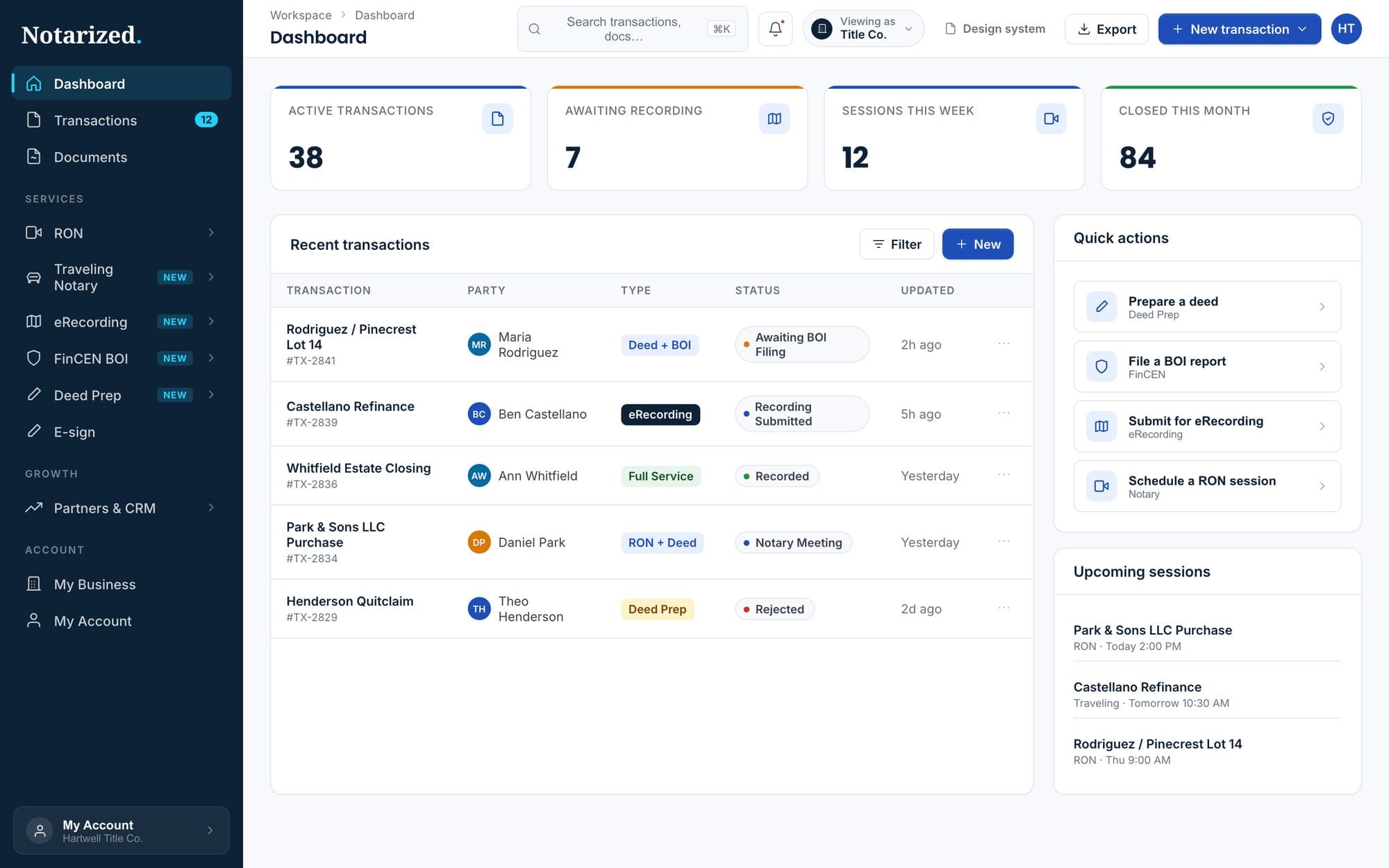
One record, seen from the desk.

Every file your team is working, with each service on it and its status, in one view. Nothing is re-keyed between vendors, and nothing is lost between them.

The Notarized workspace dashboard for a title company: active transactions, awaiting recording, closed this month, recent transactions and quick actions. Sample data.

Sample data.

Active files
Every open transaction, with the service it is waiting on.
Awaiting recording
Sealed packets ready for the county, and what came back.
Closed this month
Delivered files with their recording, journal and audit trail attached.

How a closing runs.

  1. Open the file, attach the packet

    Parties, property and documents come in once. The file routes to the services it needs.

  2. Choose remote or traveling

    Invite signers to a video session, or send a notary from the marketplace or your own roster to the table.

  3. The session runs and seals

    Identity verified, every signature watched, every page stamped, hashed and timestamped.

  4. The packet returns to the file

    Sealed PDF, recording, journal entry and audit timeline land on the transaction, ready for the county.

Every desk
that closes.

Built for the teams that move a file from contract to county, and for the notaries they rely on.

A closing coordinator on the phone at his desk.
Title and escrow
A real estate attorney reviewing a deed on a tablet by a window.
Closing attorneys
A coordinator reviewing a deed on a laptop.
Lenders and brokers
A small title office in the afternoon.
Corporate legal
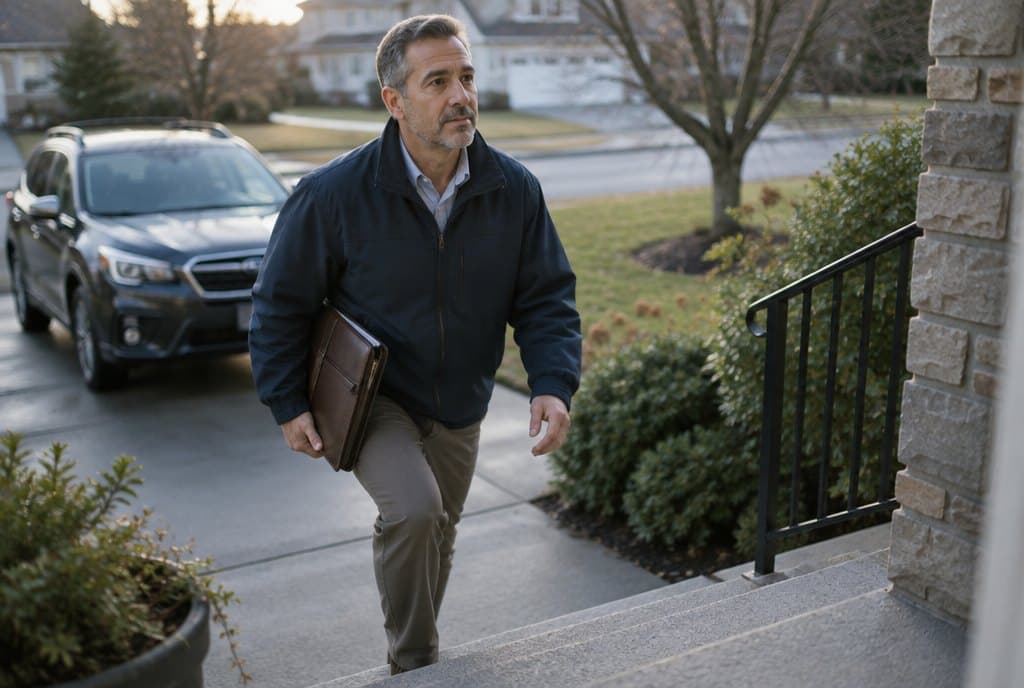
A traveling notary walking up the front steps of a home.
Notaries and signing agents

The signer is at their kitchen table. The notary is in another state. The seal is on the deed before the call ends.

That is the closing your clients remember. For your team it means fewer reschedules, no couriers, and nothing waiting on a wet signature.

Six services. One record.

Each service writes to the same transaction, so nothing is re-keyed and nothing is lost between vendors.

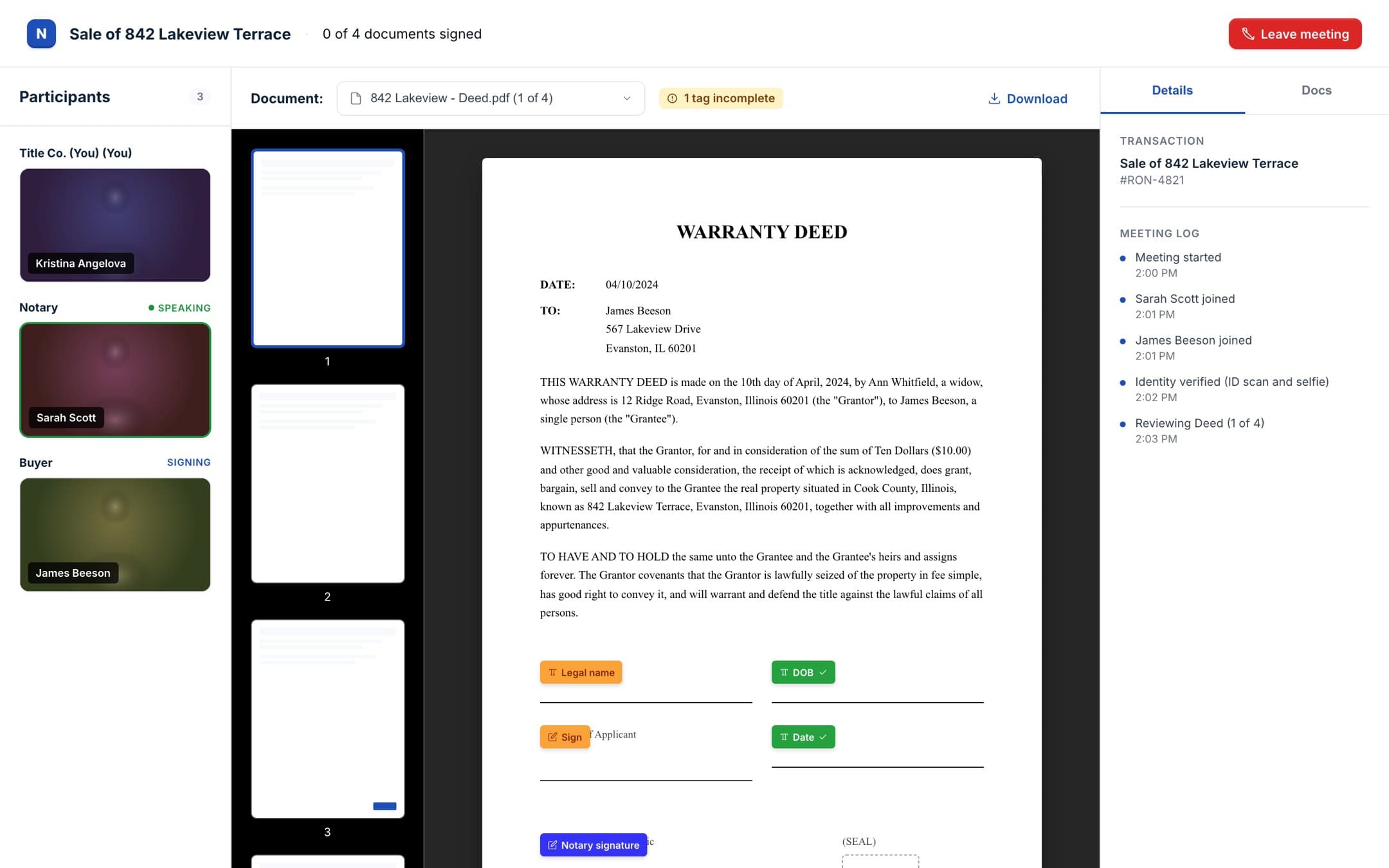
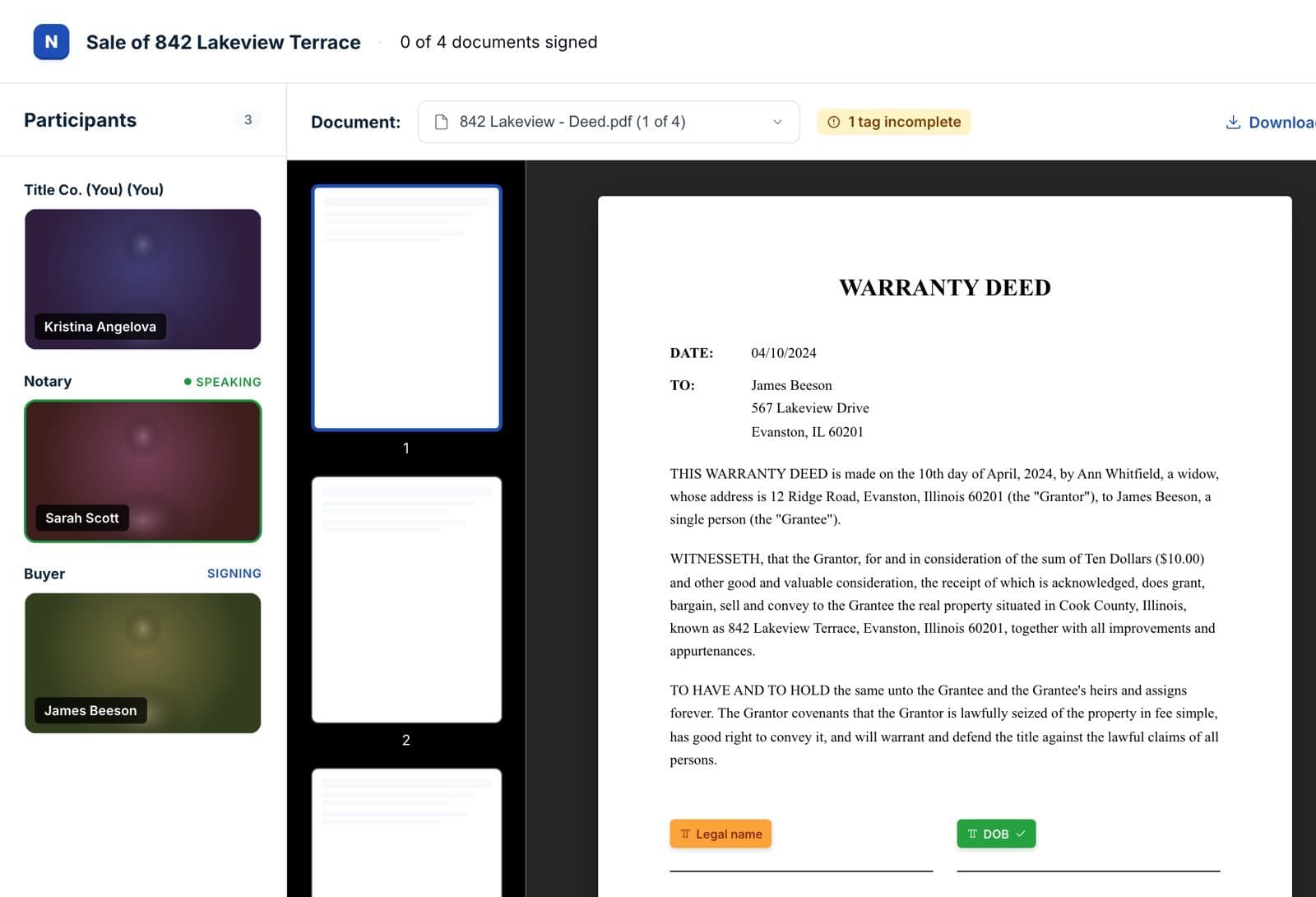
A live remote notarization session in the platform.

Remote online notarization

Live video with a commissioned notary. Identity verified before the room opens, every session recorded.

Read more

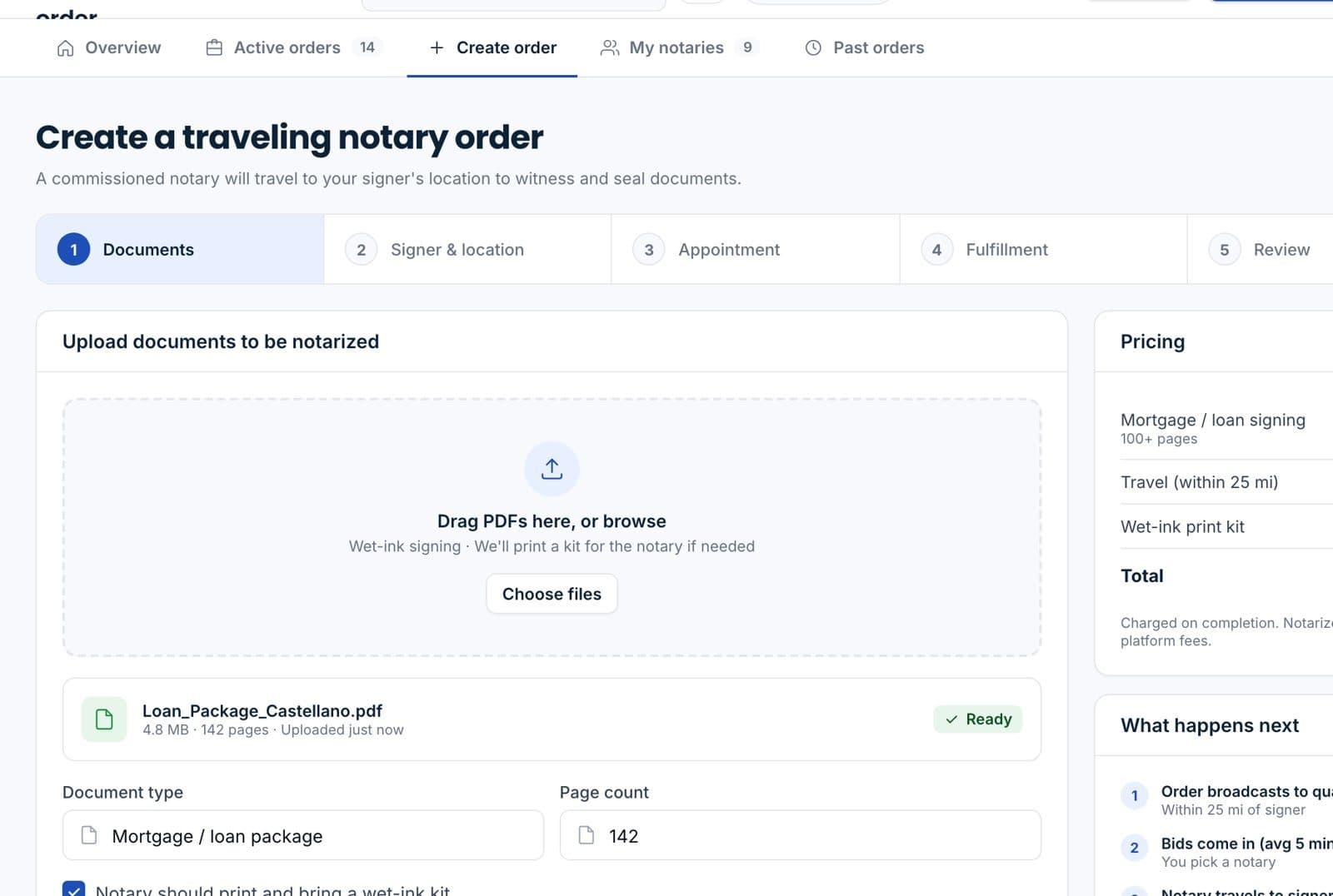
Creating a traveling notary order.

Traveling notary

A commissioned notary at the signer's door, matched by coverage area and credential, paid through the platform.

Read more
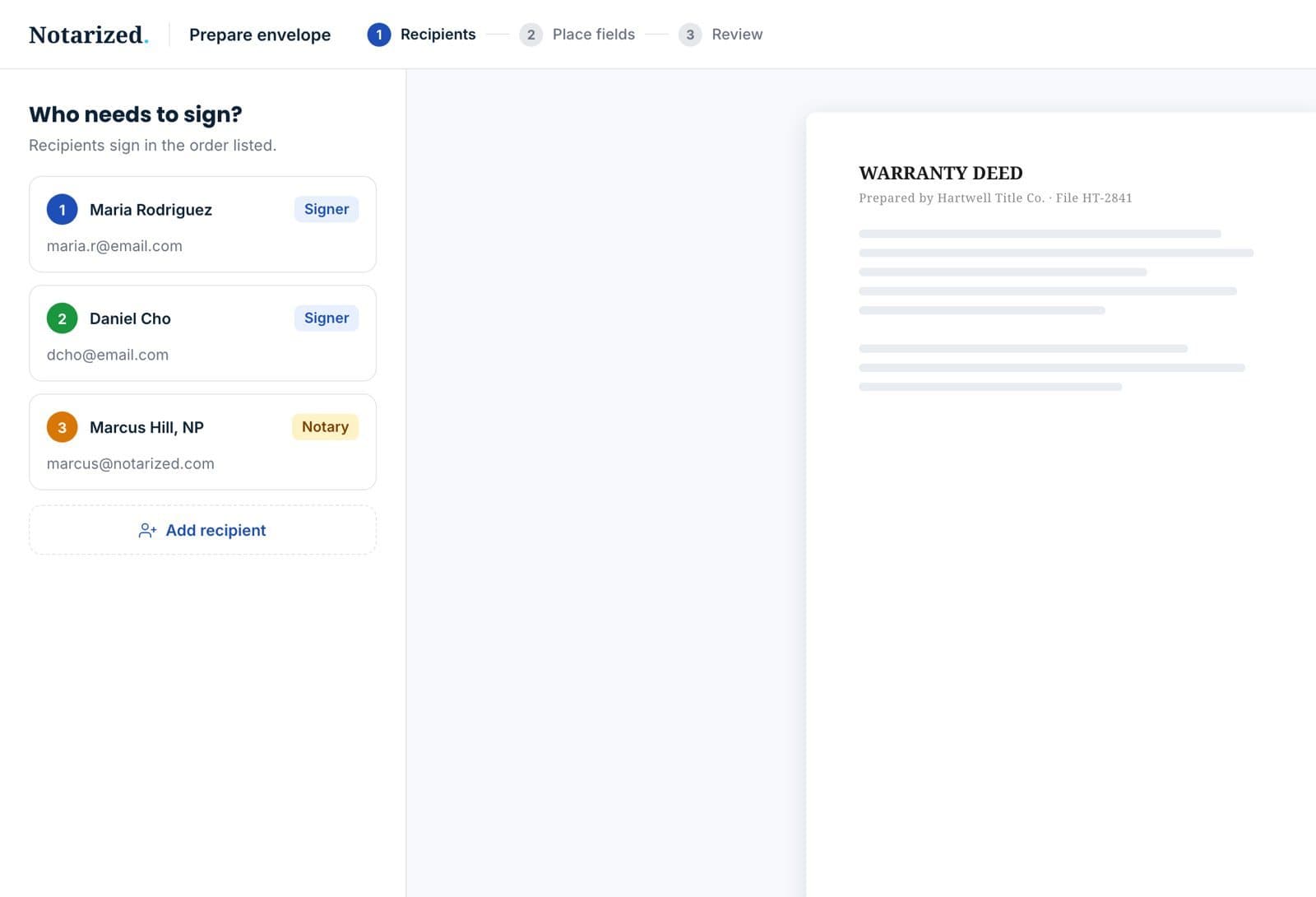
Preparing an eSign envelope.

eSign

Envelopes, field placement and a signing ceremony with a full audit trail.

Read more
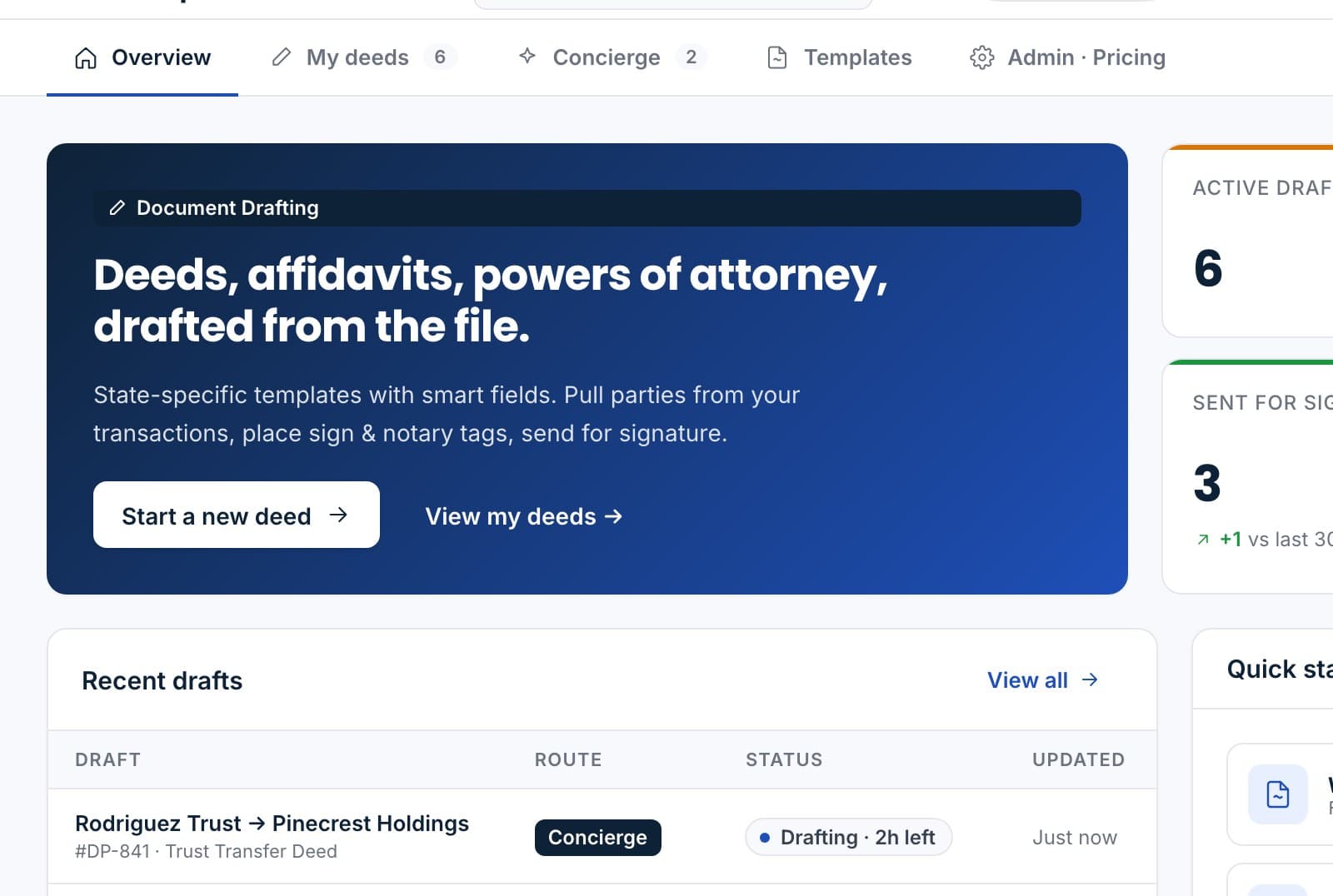
The deed preparation overview.

Deed preparation

State-specific deeds drafted from the file, fees and transfer tax computed, reviewed before they record.

Read more
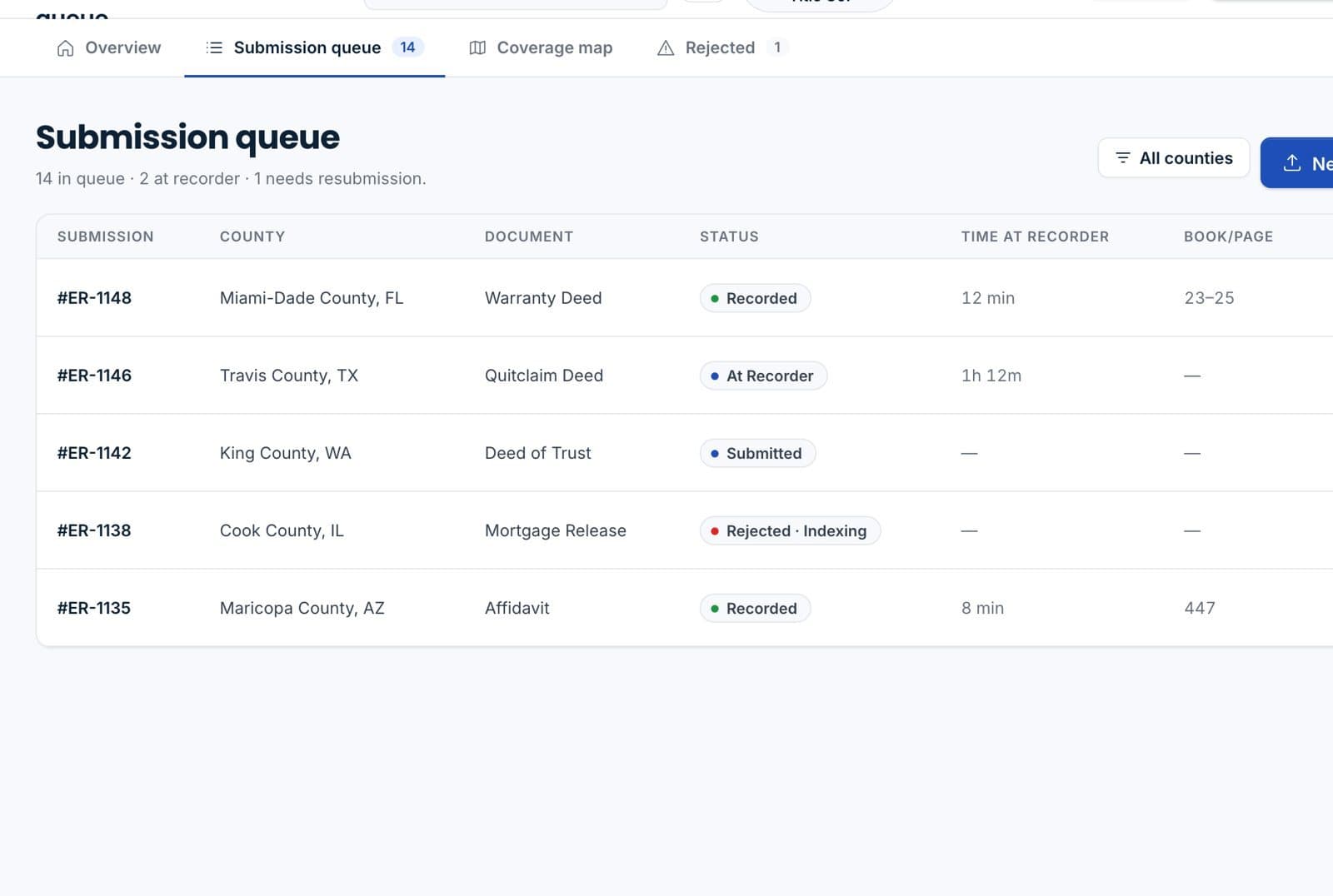
The eRecording submission queue.

eRecording

Submit sealed instruments to county recorders electronically and follow them to recorded.

Early access
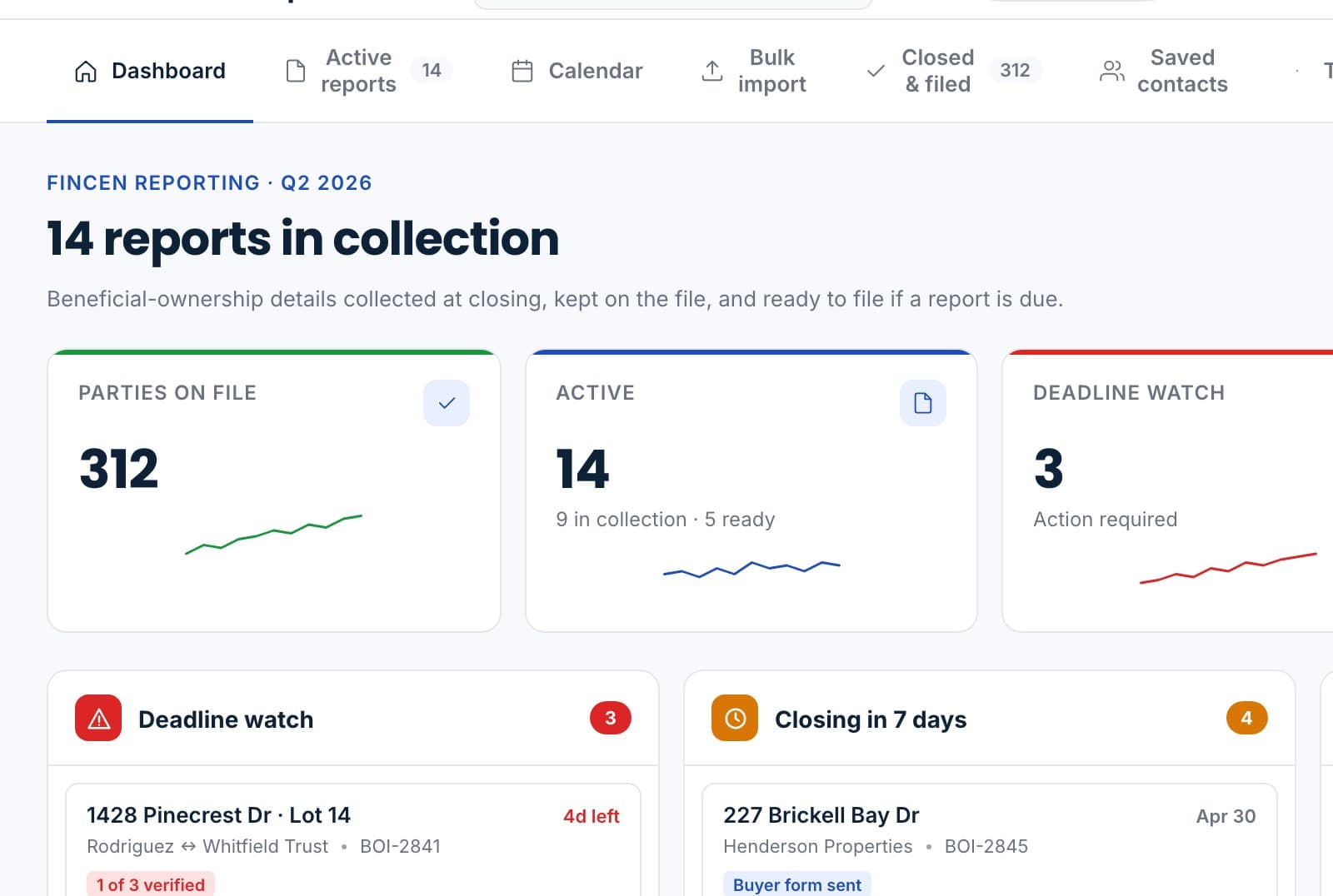
The FinCEN reporting dashboard.

FinCEN reporting

Collect beneficial-ownership details at closing now. File in one click if the rule returns.

Filing paused by court order

Or hand the file to us.

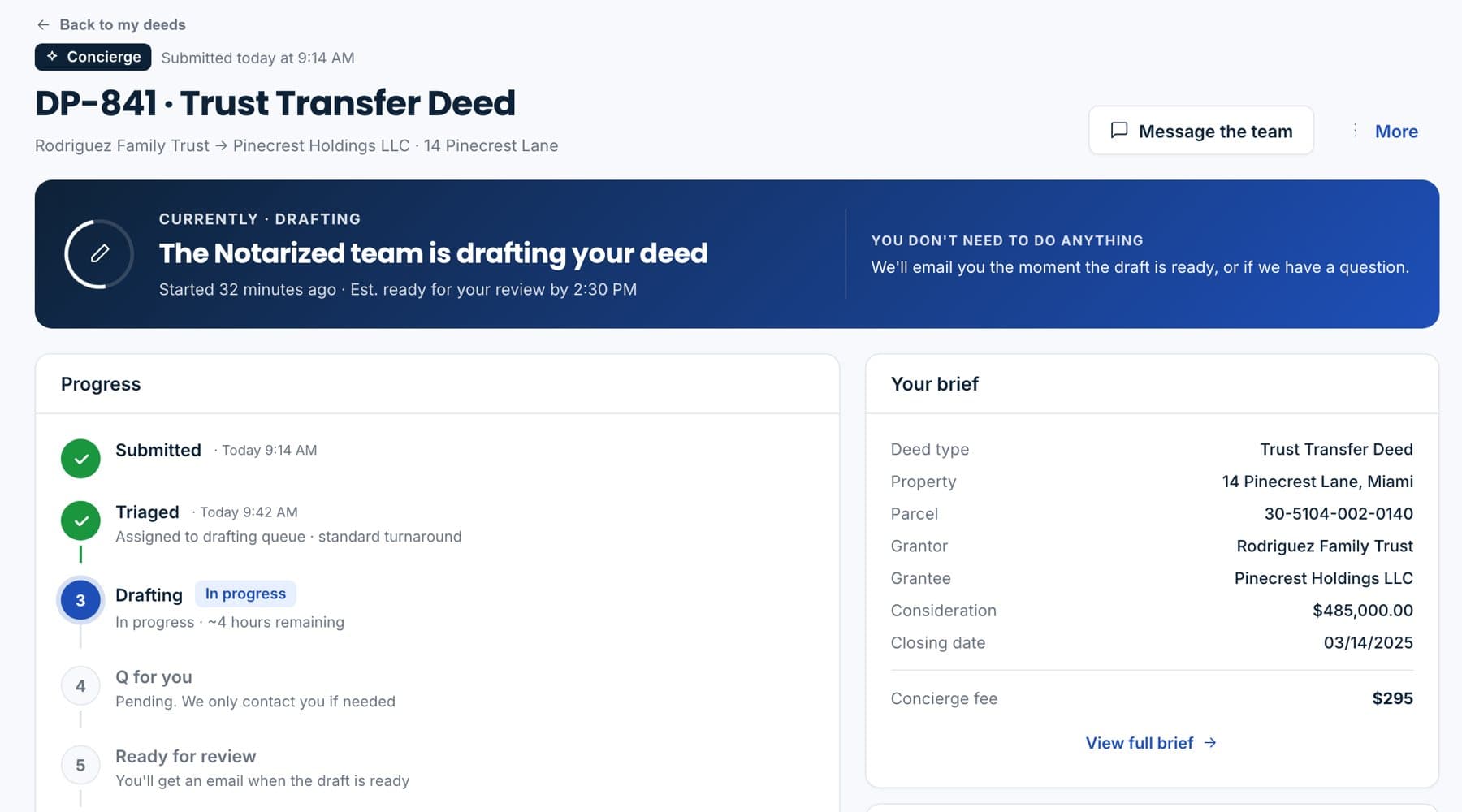
Every service has a concierge route. Post the order and the Notarized team triages it, dispatches a notary from its own roster or drafts the deed end to end, and messages you only when it needs an answer. Progress shows on the same file.
  • Traveling notaryWe source, dispatch and follow the notary to the signer's table.
  • Deed preparationDrafted by the Notarized team from your brief, reviewed before it records.
  • Remote notarizationWe schedule the session, run identity checks and seal the packet.
How concierge works
A concierge deed order in the workspace: the Notarized team is drafting the deed, with progress from submitted to ready for review. Sample data.

What comes back to the file.

Everything a lender, underwriter or recorder will ask you for, attached to the transaction the moment the session ends.

Sealed PDFEvery page stamped, hashed and timestamped, with a certificate of completion appended.
Session recordingAudio and video of the whole session, encrypted, retained as the state requires.
Journal entryThe notary's entry, written automatically and never editable.
Audit timelineWho joined, when identity passed, when recording stopped, when the transcript was hashed.
Public verification pageReachable from the QR code on the document, no account needed.
Recording statusBook and page or instrument number on the same file when the county records it.

Sealed, and checkable by anyone.

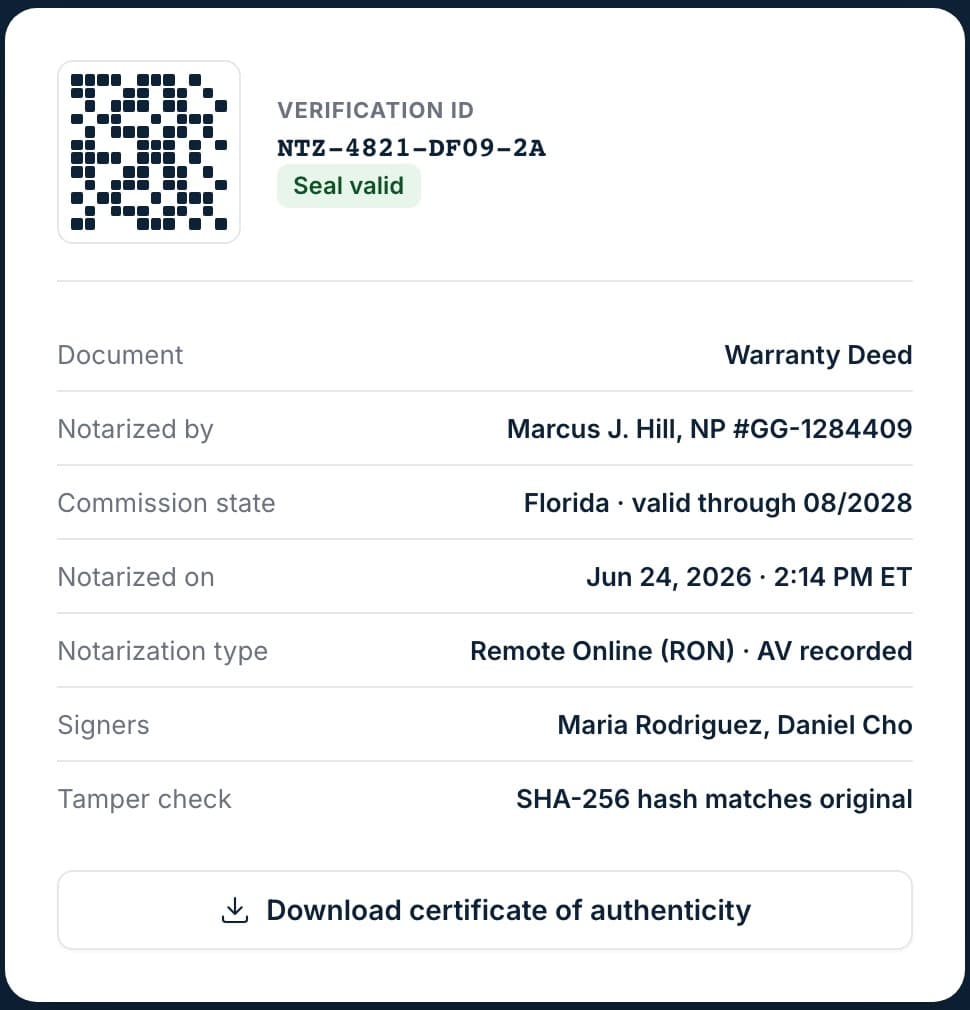
The seal is a chain of checks, not a picture of a stamp. Anyone with the QR code can open the verification page without an account.
SHA-256Hash of the sealed file, compared on every verification.
Cryptographic sealPlatform seal applied through SSL.com's cloud signing service.
RFC 3161 timestampTrusted time from an independent authority.
PDF/A archiveArchival format with a certificate of completion appended.
Notary journalEntry written automatically, never editable.
Audit timelineWho joined, when identity passed, when recording stopped.
The public verification card: QR code, verification ID, seal valid, notary, commission, timestamp, signers and tamper check.

Sample data.

What you can hand to your underwriter.

Single sign-onTeam access through your identity provider, with roles per office.
Encrypted at restDocuments and recordings are encrypted in storage and served through signed, expiring links.
Access audit logEvery download and view of a sealed file is logged with who, when and from where.
Locked retentionArchived records move to object-locked storage that cannot be altered or deleted for the retention period.
Archival PDF/ASealed files are written in the archival format recorders and courts accept decades on.
A traveling notary carrying a folio walks up the front steps of a home in the morning.

For the notaries doing the work.

Commissioned notaries and signing agents take remote and traveling jobs from the marketplace, matched by coverage area and credential. The journal writes itself, credentials live in one place, and payouts arrive without an invoice.

Questions title teams ask first.

Will our recorder and our lenders accept a remotely notarized document?
Remote online notarization is authorized in 49 states and the District of Columbia, and documents notarized under one state's law are generally recognized in the others. California's full authority begins in 2030. Every sealed document carries a certificate of completion and a public verification page, which is what lenders and recorders ask for when they check.
What if a county or a document still needs wet ink?
You order a traveling notary from the same file. A notary from the marketplace or your own roster goes to the signer, and the journal entry and packet come back to the transaction the same way.
How do our files get in?
Transactions are created from the workspace or imported, and parties, property and documents attach once. The eSign service has an API for teams that want to connect their own systems; deeper integrations with title production software are on the roadmap.
What do we get back, and where does it live?
The sealed PDF, the recording, the journal entry, the audit timeline and the verification page, all on the transaction record. Recordings and documents are encrypted, served through signed links, and moved to locked retention storage.
How is it priced?
Per session and per job, with no subscription required to start. Volume pricing is available for offices closing at scale. See the pricing page or ask during the walkthrough.

See it on your next closing.

A 30-minute walkthrough with a real session and a real seal. Bring your own documents if you like.