Notarized
A notary at a home office desk on a video call, an embosser and journal beside the keyboard.

The journal writes itself. Your commission lives in one place.

Every session and visit ends with a journal entry written from the record, not from memory. Your commission details sit on your profile, where offices see them before they send you work.

One act, one entry.

From the session to the journal. Sample data throughout.

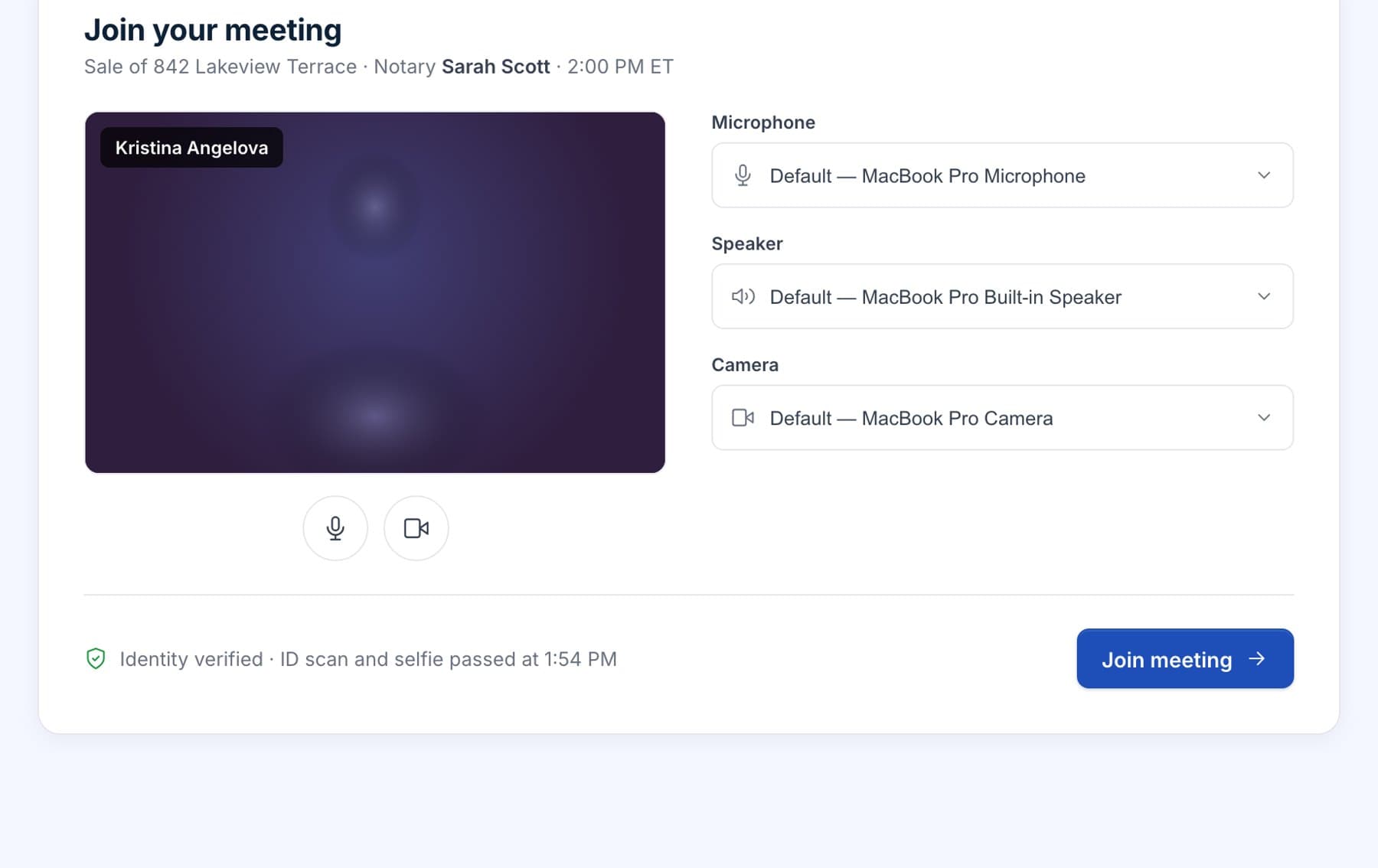
The pre-call lobby with identity verified and device checks.

Sample data.

Identity before the act

For remote sessions the signer's ID is scanned and matched to a selfie before the room opens. The result is on the record; the ID image is not.

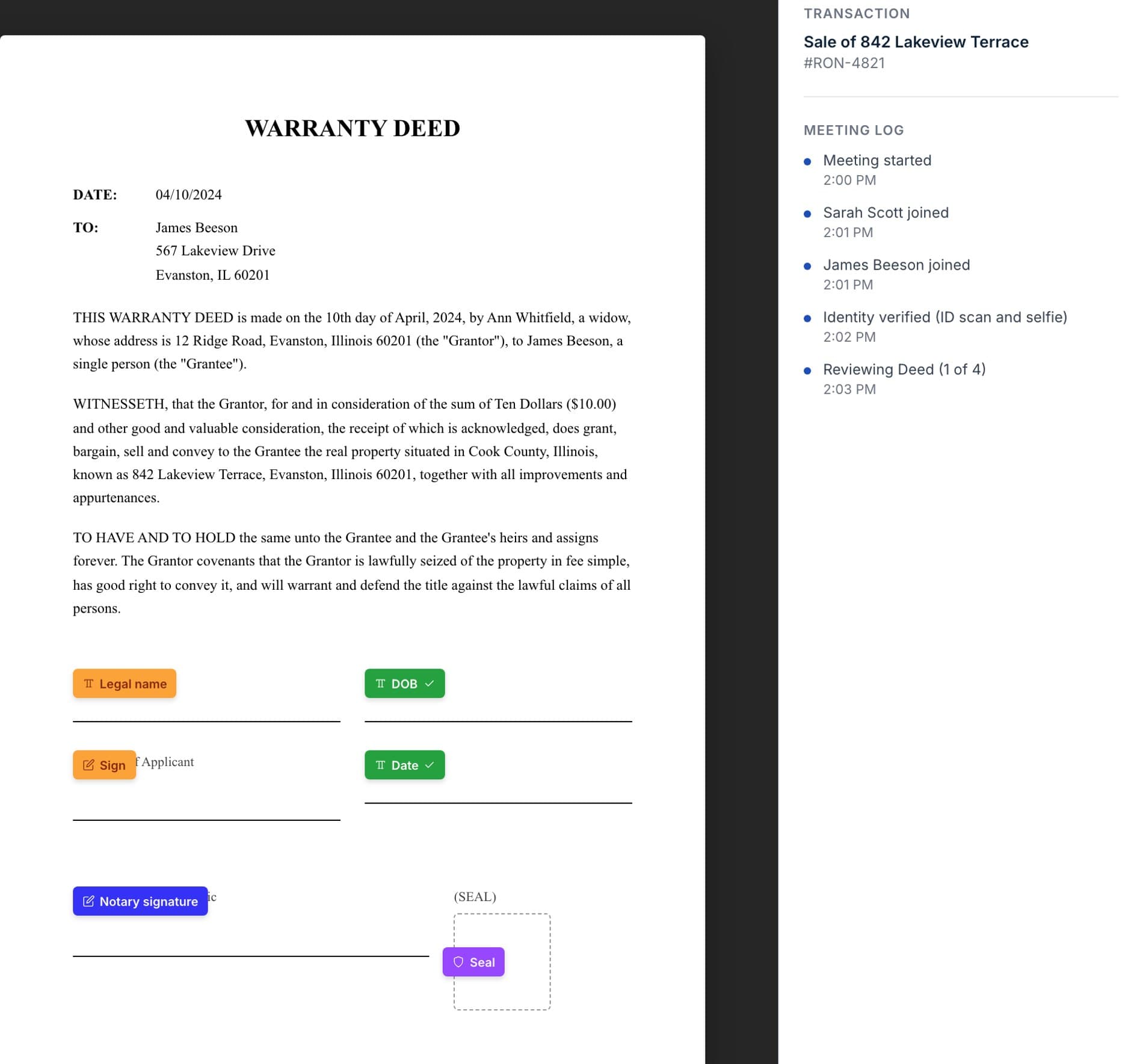
The live session from the notary's side: the deed with tagged fields and the meeting log.

Sample data.

Perform the act

Tag the fields, watch the signatures, and let the recording and transcript run. Nothing here is re-keyed later.
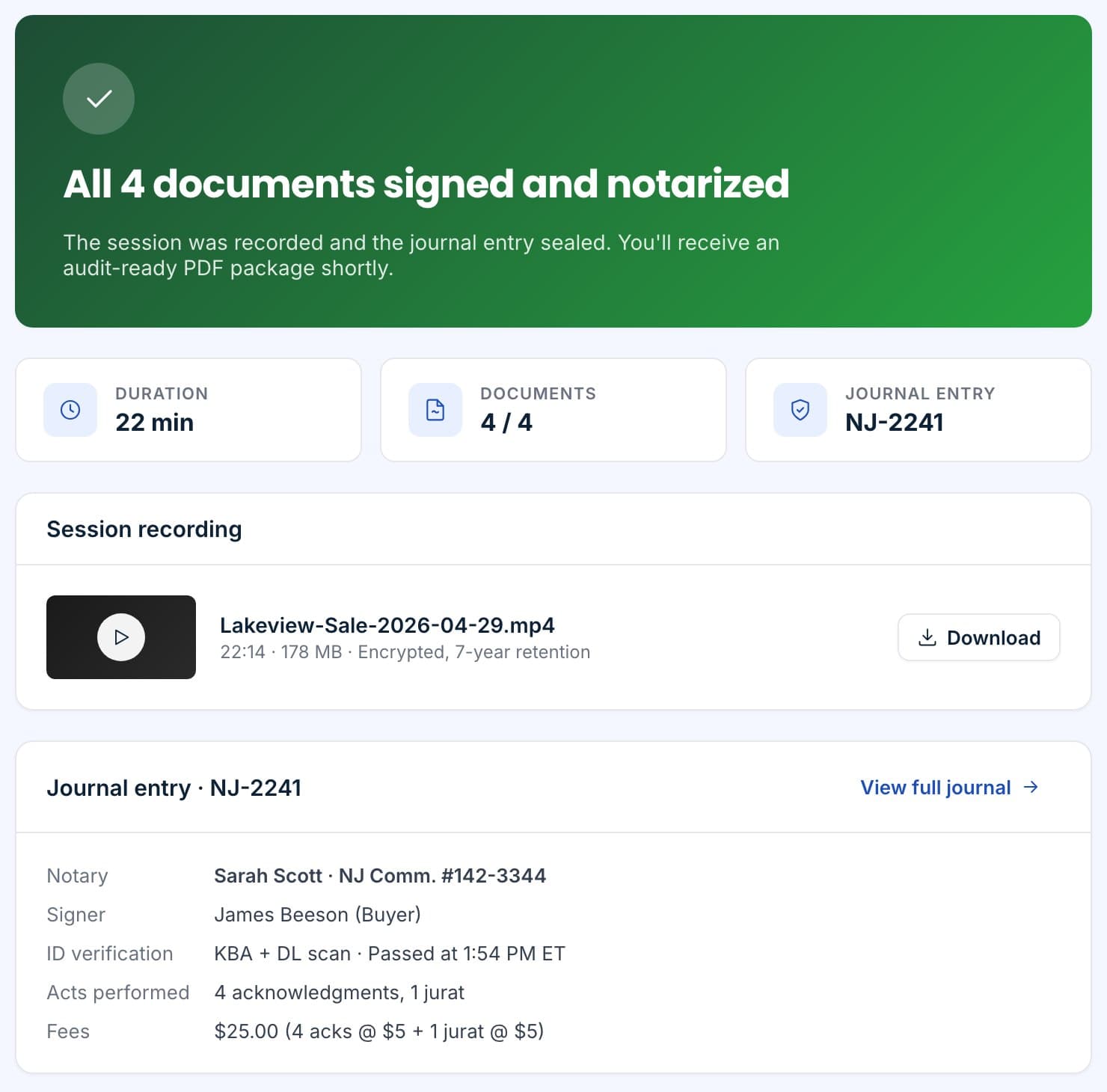
Session complete: recording, journal entry and the hand-off to recording.

Sample data.

The entry writes itself

When the session is sealed the journal entry is written from what happened: the act, the signers, the identity result and the time. It cannot be edited afterwards.
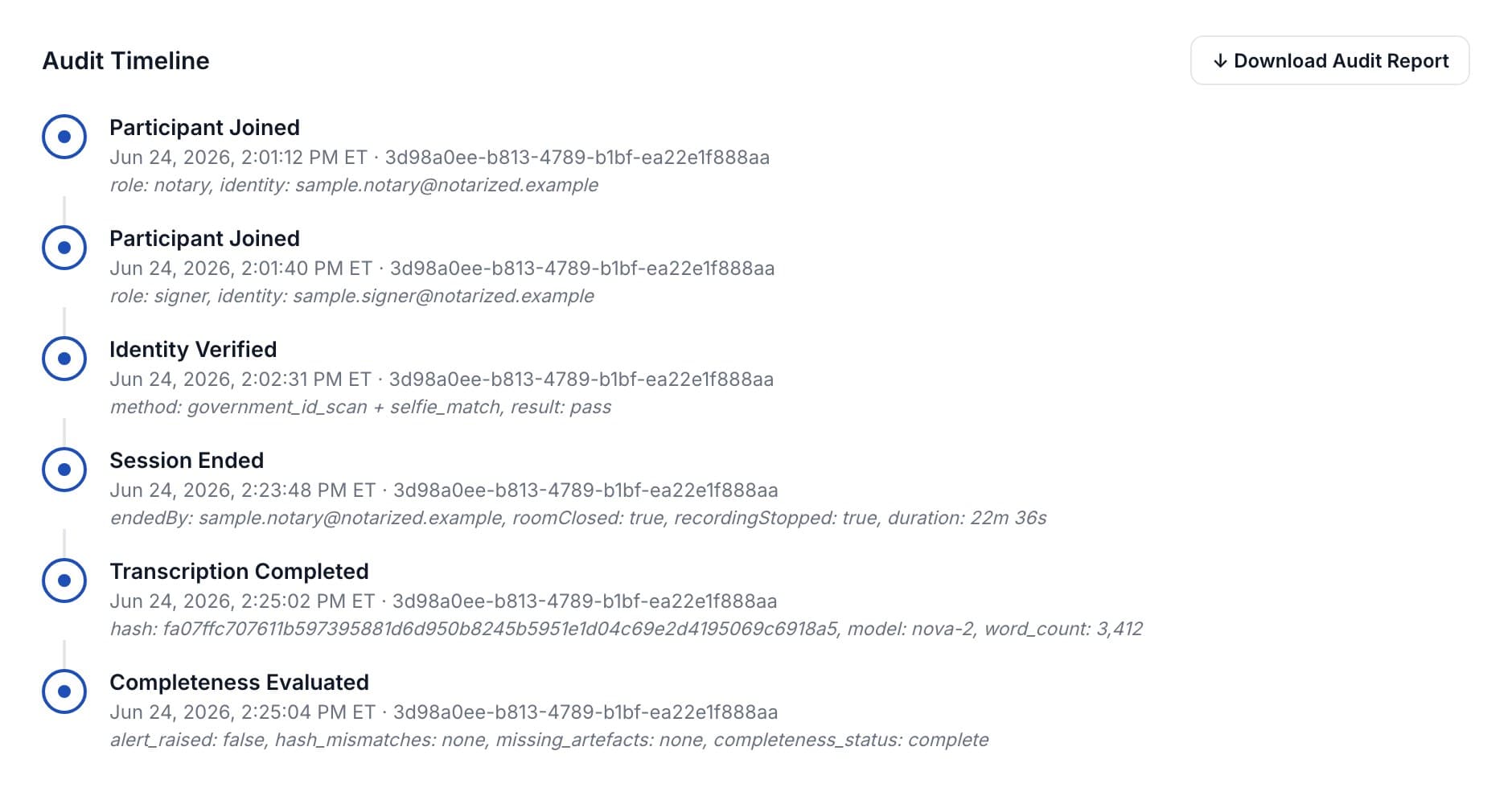
The audit timeline on a session summary: participant joined, identity verified, session ended, transcript hashed, completeness check.

Sample data.

The record stays with the act

The audit timeline, the transcript hash and the completeness check live on the session summary, next to the entry.

At the table too.

A traveling visit ends the same way: the entry is written when you mark the job complete, and the signed packet goes back to the office.

What the entry holds.

The things a journal is supposed to hold, captured from the session rather than typed in afterwards.
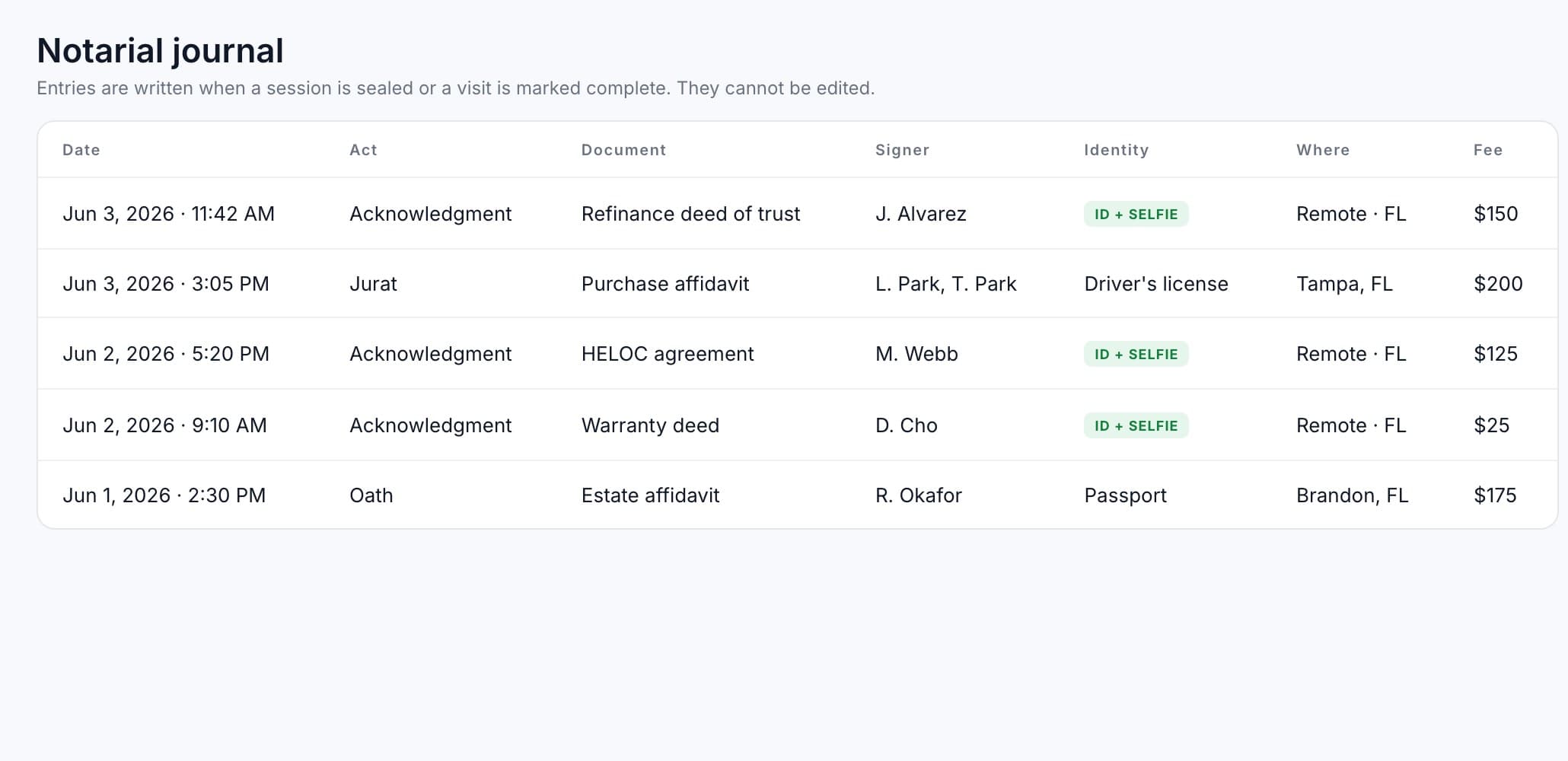
  • The actDocument type, the date and time, and whether it was remote or in person.
  • The signersNames, and the identity verification result for remote sessions.
  • The recordA reference to the recording, the transcript hash and the sealed document.
  • Never editableEntries are written once. Retention follows the notary's state.
The notarial journal: five entries with date and time, act, document, signer, identity method, where and fee.

Sample data.

Credentials on one profile.

Offices see your commission before they dispatch to you.
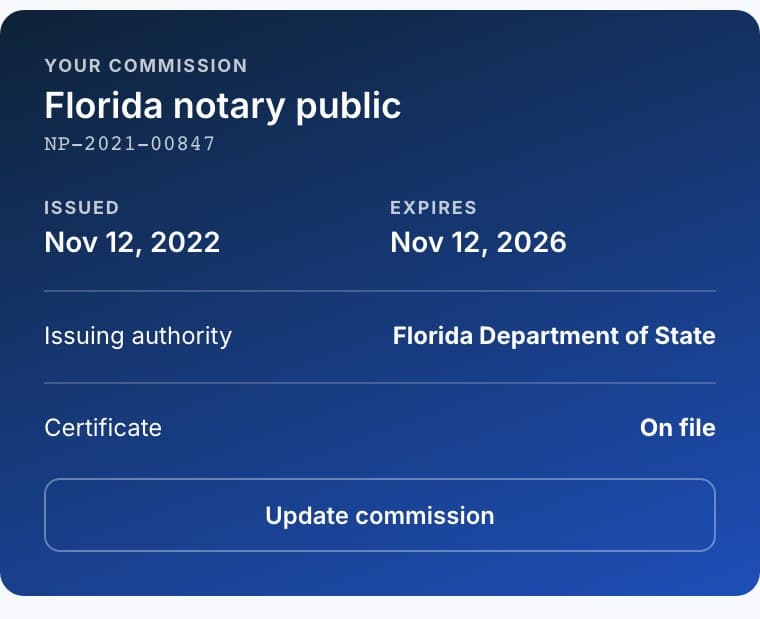
CommissionThe certificate, the issuing authority, and the issue and expiration dates.
Your detailsYour legal name and date of birth on the profile, as they appear on the commission.
Coverage areaThe areas and radius you travel to, used to match traveling jobs.
Public profileWhat an office sees when it considers you for a job.
See the marketplace
The commission card on the notary profile: state, number, issue and expiration dates, issuing authority, certificate on file.

Sample data.

Questions we get on the first call.

Can I edit a journal entry?
No. Entries are written once from the session record. If something in the record is wrong, the session summary keeps the evidence, and a correction is a new note, not an edit.
How long is the journal kept?
For the period your state requires, then in locked archival storage. Entries stay on your account for that whole period.
Does the platform keep the signer's ID?
The verification result is written to the record. The ID image is held by the verification provider under its own terms, not by Notarized.
What happens when my commission expires?
The expiration date is on your profile, where offices see it. Update it with the new certificate when you renew.

Bring your commission.

Profile, coverage area, commission details and a bank account. Then the journal takes care of itself.
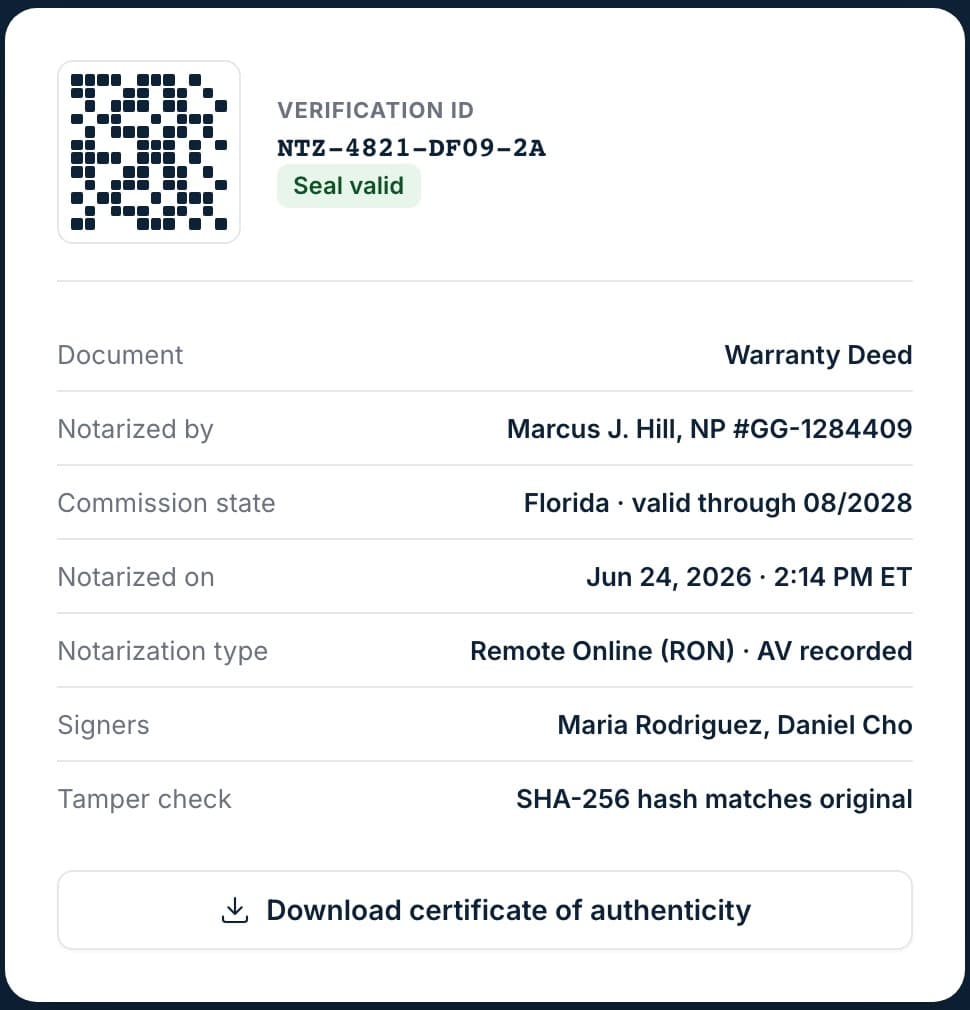
Sample data.